

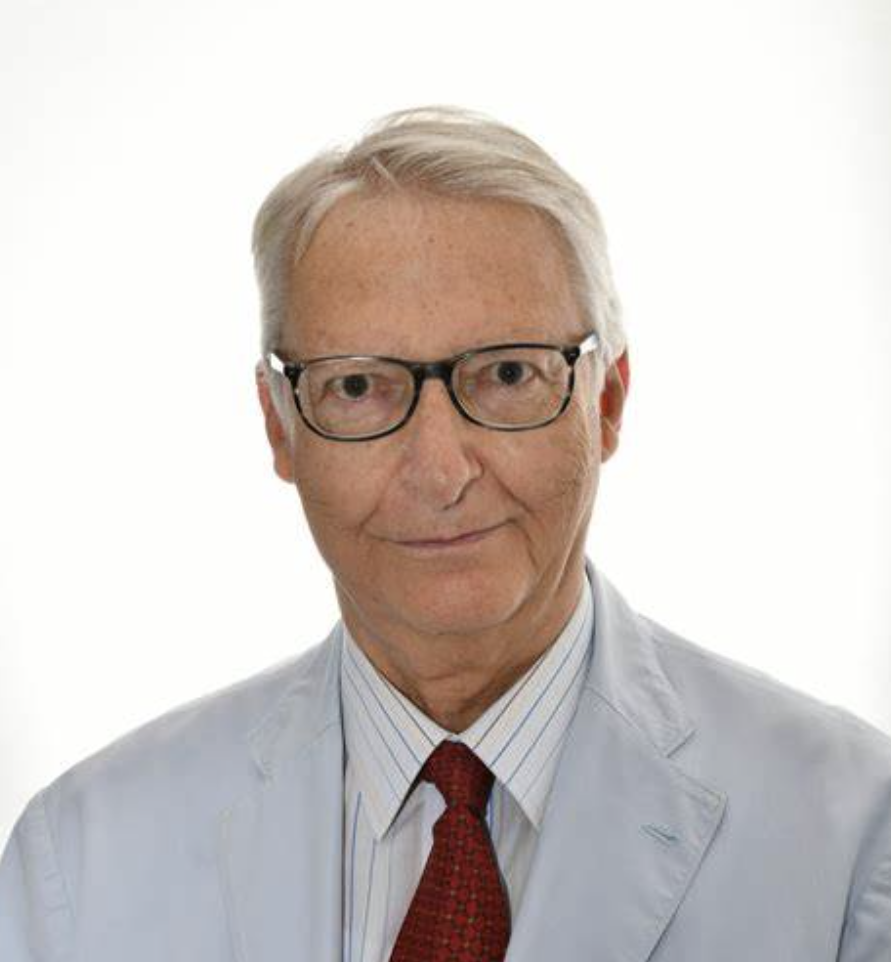
Prof. Giuseppe Buja, University of Padova Padova, Italy
Giuseppe Buja (Life Fellow, IEEE) received the Laurea degree (with Hons.) in power electronics engineering from the University of Padova, Padova, Italy. He is currently a Senior Scholar with the University of Padova.,He has carried out a pioneering research work in the field of power and industrial electronics,originating the modulating-wave distortion for pulse-width modulation inverters, initiating the application of digital signal processors to the control systems of power electronics converters, conceiving cutting-edge techniques for the control of electric drives, and advancing the design of powertrain and charging systems for electric vehicles. His current technical research focuses on the deployment of sustainable electric grids.,He was the recipient of the IEEE Industrial Electronics Society (IES) Eugene Mittelmann Achievement Award “in recognition of his outstanding technical contributions to the field of industrial electronics,” and the 2016 Best Paper Award from the IEEE Transactions on Industrial Electronics. He was with IEEE in several capacities, including as the General Chairman of the 20th Annual Conference of the IES (IECON) in 1994. He is currently a member of the Steering/Technical Committee of International Conferences, Editorial Board of Scientific Journals, and a Senior Member of the Administrative Committee of the IES. Speech Title: Update Soon

Prof. Jianhua Zhang, North China Electric Power University, China
Zhang Jianhua (Female, born March 1969) obtained her Bachelor's, Master's, and Ph.D. degrees in Engineering in 1990, 1993, and 1996, respectively, from North China Electric Power University, the Beijing Graduate School of North China Electric Power University, and Beihang University (BUAA). She served as a Senior Visiting Scholar at UMIST (University of Manchester Institute of Science and Technology), UK, from January 2000 to January 2001. Promoted to Associate Professor in 1998 and full Professor in 2004, she was appointed as a Doctoral Supervisor in 2008. Professional Affiliations & Service: Committee Memberships: Executive Director of the "Internet of Things" Committee of the Chinese Society of Instrumentation; Executive Director of the Energy Internet Optimization and Control Committee of the Chinese Association of Automation; Executive Director of the IEEE PES Sub-committee on Smart Grid and Artificial Intelligence. Editorial Roles: Associate Editor for Transactions of the Institute of Measurement and Control; Editorial Board Member for Energies. Expert Reviewer: Has served as a correspondence reviewer for the National/Beijing Natural Science Foundation (General/Excellent Young programs) and the National Natural Science Award. Also served as a panel reviewer for key projects of the National Natural Science Foundation, international cooperation projects under the Ministry of Science and Technology, and the Beijing Natural Science Foundation. Served as a Technical Program Committee (TPC) / International Program Committee (IPC) member for numerous international conferences and delivered keynote/special invited speeches at seven international conferences. Research Interests: Her primary research focuses on process control, fault diagnosis, stochastic control, and state estimation. Her recent work emphasizes the intersection of Smart Grids and Artificial Intelligence. Research Achievements: Led a total of 20 vertical research projects (including 7 national-level and 13 provincial/ministerial-level projects), 1 project funded by the UK Royal Society Newton Fund, and 1 horizontal project. Authored over 50 SCI-indexed papers. Awarded the Third Prize of Beijing Science and Technology Progress as the principal investigator.

Prof. Jun Zheng, Southwest Jiaotong University, China
Jun Zheng received the B.E. and Ph.D. degrees in Electrical Engineering from Southwest Jiaotong University (SWJTU), Chengdu, China in 2002 and 2007, respectively. She is currently working at the State Key Laboratory of Traction Power (TPL) of SWJTU in Chengdu, China. She was awarded the Endeavour Research Fellowship of Australian Government as a Visiting Honorary Fellow at the Institute for Superconducting & Electronic Materials (ISEM) at the University of Wollongong (UOW) in 2013. And then, she visited and cooperated with the ISEM at the UOW again from Mar. 2015 to Feb. 2016 under the support of Chinese Government Scholarship. She has presided over 14 research projects including the National Hi-Tech R&D Program, the National Science Foundation of China, the Provincial Science & Technology Pillar Program, the Provincial Science & Technology Key Program and so on. Up to now, she has authored or co-authored 1 scientific papers and granted 32 patents in China. Among these papers, over 40 papers are published in IEEE Transactions. in her academic publications. She joins in the editorial board of Actuators, Superconductivity. She is also the invited reviewer of several journals like IEEE Transactions on Applied Superconductivity, IEEE Transactions on Magnetics, IEEE Magnetics Letters, Journal of Applied Physics, Journal of Alloys and Compounds, Superconductor Science and Technology, Journal of Magnetism and Magnetic Materials, Computer Physics Communications and so on.
Prof. Gheorghe Grigoras, "Gheorghe Asachi" Technical University of Iasi, Romania
Gheorghe Grigoras, senior lecturer, Ph. D. was born in 1976, February 28, in Vatra Dornei, Romania. He graduated in 1999 from “Gheorghe Asachi” Technical University of Iasi, Electrical Engineering Faculty and began his academic career the same year. He was awarded the PhD scientific degree in the Power Engineering field in 2005. His scientific activity materialized in 12 published books, 1 book chapter, 185 scientific papers as main author and co-author published in conference proceedings and journals. Since 1999, he was a team member in 15 scientific research projects. As part of The National Plan for Research, Development and Innovation PNII (2007-2013) from Romania, in the Human Resources - Awarding Research Results programme, he has three awarded papers. In the last two years, he was a member in the scientific committee of prestigious international conferences: 7th International Conference on Deregulated Electricity Market Issues in South – Eastern Europe, 2012, Romania, 7th International Conference and Exposition on Electrical and Power Engineering, Romania, 2012, Science and Information Conference, London, UK, 2013, 2nd International Conference on Computation Theory and Information Technology Taiwan, 2013, 4th International Conference on Computing and Informatics, Malaysia, 2013. He is a reviewer for international journals: International Journal of Advanced Research in Artificial Intelligence, International Journal of Electrical Power & Energy Systems, IEEE Transactions on Power Systems, Energy, WSEAS Transactions on Power Systems, Network and Communication Technologies Journal, Journal of Electrical and Control Engineering, Journal of Energy and Power Engineering.

Assoc. Prof. Xiaolong Jin, Key Laboratory of Smart Grid of Ministry of Education, Department of Electrical Engineering, School of Electrical and Information Engineering, Tianjin University, China
Jin Xiaolong is an Associate Professor and Distinguished Researcher at Tianjin University, serving as the Deputy Director of the China-UK Joint Research Center for Electric Vehicles and Energy Internet. His research focuses on load-side resource regulation strategies and market mechanisms. He has led one major national science and technology project on smart grids, one National Natural Science Foundation of China (NSFC) project, one sub-project of a National Key R&D Program, and five other provincial/ministerial-level projects including the Tianjin Natural Science Foundation. He is a committee member of the Electric Traffic Intelligent Charging and Battery Swapping Network Committee at the Chinese Society for Electrical Engineering (CSEE) and serves as a Young Editor for several journals, including Protection and Control of Modern Power Systems, Energy Conversion and Economics, Electric Power Construction, and Southern Energy Construction. He has published over 90 academic papers in prestigious journals such as IEEE Transactions on Smart Grid, IEEE Transactions on Sustainable Energy, Applied Energy, Proceedings of the CSEE, and Automation of Electric Power Systems. Among these, he is the first or corresponding author of 24 SCI papers (including 2 ESI Highly Cited Papers in the top 1%) and 11 EI journal papers (2 of which were selected for the "F5000—China's Top Journal Papers"). He was recognized in the World's Top 2% Scientists list for 2023 and 2024 and was named a Top 1% Highly Cited Scholar by CNKI in 2024. He has received the Tianjin Science and Technology Progress Second Prize and the China Automation Society Third Prize. Students with a background or strong interest in energy storage science and engineering, power system automation, energy storage economics, and policy are welcome to apply for admission or graduate studies under his supervision. Speech Title: Aggregation, Control, and Market Mechanisms for Large-Scale Buildings-to-Grid.

Assoc. Prof. Mustafa Ergin Şahın, Department of Electrical and Electronics Engineering, Recep Tayyip Erdogan University, Turkey
Mustafa Ergin Şahin was born in 1978 in Trabzon, Turkey. He received his B.Sc. degree in Electrical & Electronics Engineering from Karadeniz Technical University (KTU), M.Sc. degree from Gazi University in Ankara and Ph.D. degree from KTU, Trabzon, Turkey, in 2002, 2006 and 2014, respectively. He was a Guest Researcher with TUBITAK 2219 postdoctoral research program at the Department of Energy Technology, Aalborg University from September 2018 to September 2019. He is currently an associate professor in Electrical and Electronics Engineering Department at RTE University. He was worked at different projects on low voltage power systems and relay manufacturer for power systems. He is an active reviewer for scientific journals in the field. He is also member of the Chamber of Electrical Engineers in Turkey. His main research interests are power electronics and utilization of renewable energy. He is the author of two books in circuit analysis and measurement, electronics laboratory. Speech Title: Micro Grid of Power Electronics, Renewable Energy Storage, and Collaboration Opportunities
Abstract: In this invited keynote presentation general informations such as; description, types and avantgages and disadvantages of microgrids will be given. Informations about renewable energy sources will be given also. Power electronic converters structure for microgrids are also investigated. Buck, boost, buck boost, bidirectional, back to back converter for microgrids and renewable energy applications are given with some simulation results and supported with some published papers. Control of power converters for microgrids are given for proportional integrated derivative (PID), sliding mode control (SMC), fuzzy logic control (FLC). The energy storage process and new tecnologies in microgrids investigated. Battery, hydrogen energy, supercapacitor applicatins are investigated for hybrit storage technologies. An overview on related published papers investigated. Morever the facilities and colleboration opportinities between the other universites and countries are given in this keynote presentation.